



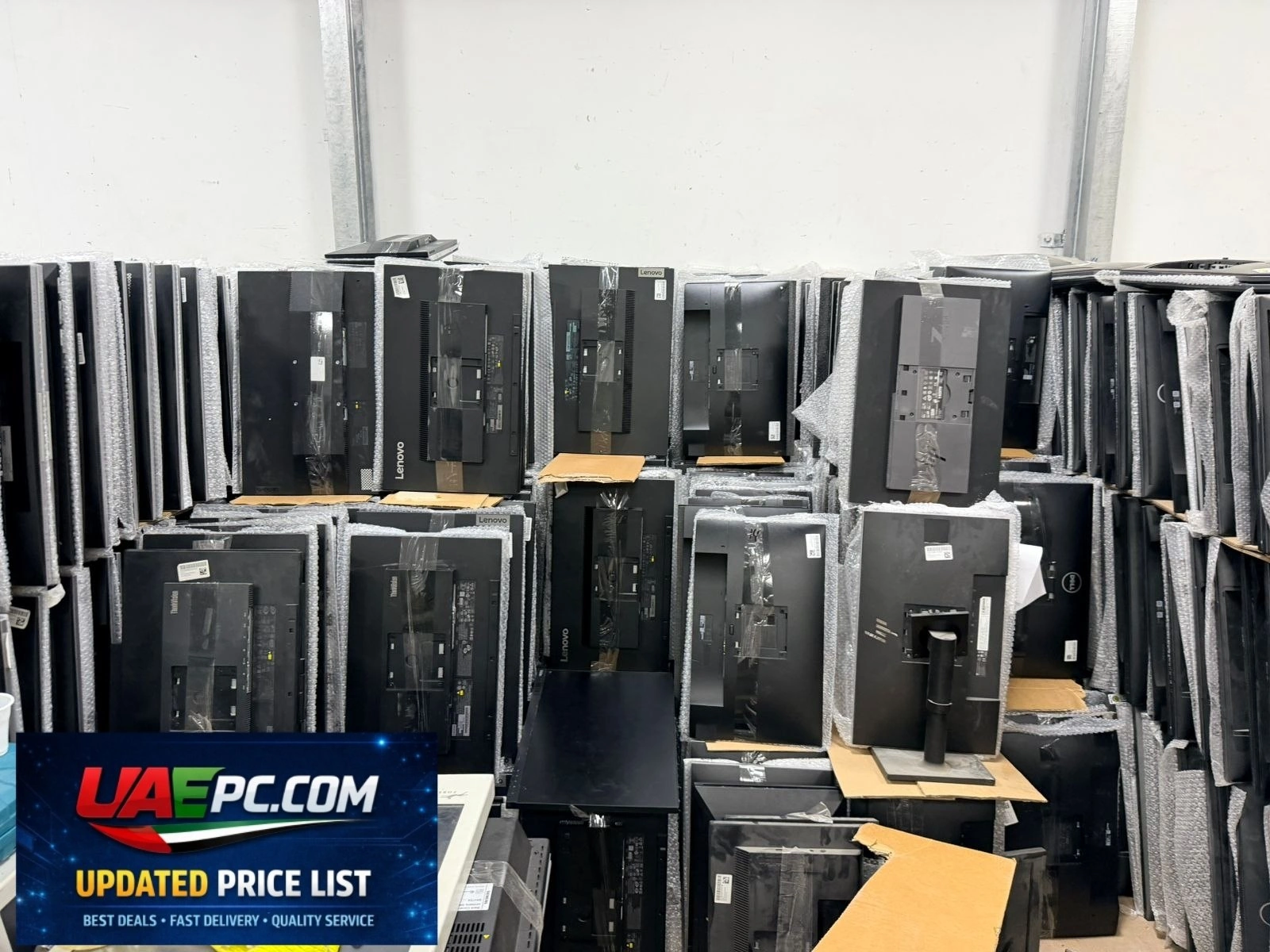
For B2B importers across Africa, Asia and the wider Middle East, the Sharjah computer market has quietly become the world's third-largest wholesale hub for refurbished business laptops — sitting just behind Shenzhen and Hong Kong, and ahead of every other Gulf, Levantine or European cluster. Every month, hundreds of thousands of Dell Latitude, HP EliteBook and Lenovo ThinkPad units arrive in Sharjah from European corporate IT lease-returns and end-of-life refresh cycles, get cleaned, graded and re-packed in warehouses across Al Rolla, Al Mahatta and the Industrial Area, and then leave again on trucks, sea containers and 200-kilo air pallets to Lagos, Nairobi, Karachi, Tashkent, Cairo and forty other commercial cities.
I'm Mohammad Dolatyari, founder of UAEPC.COM Computers (Mohammad Dolatyari Electronics Trading LLC) — a Sharjah-based UAE laptop wholesaler shipping to fourteen countries. This guide is what I would have wanted to read in 2010 when I first walked into Rolla Square with a shopping list and zero contacts. It covers every district, every brand category, the real 2026 price ranges, the grading code suppliers use, the negotiation tactics that work, the five risks to avoid, and the freight rates to every major destination. By the end you'll either book a flight knowing exactly what to do, or — more likely — realise you don't need to fly at all.
Why Sharjah, not Dubai?
Most outsiders assume Dubai is the centre of UAE computer trade. It isn't — and hasn't been for nearly two decades. The wholesale heart sits ten kilometres up the coast in Sharjah, and the reasons are economic, not coincidental:
- Warehouse rent: One square metre of warehouse space in Sharjah Industrial Area runs AED 40-60 per year. The same space in Dubai's Al Quoz or Ras Al Khor costs AED 90-150. For a uae computers supplier running a 2,000 m² warehouse, that's roughly USD 35,000-65,000 of difference per year — straight into the unit-cost margin.
- Trade licensing: Registering a company with the Sharjah Economic Development Department typically costs 30% less than the equivalent Dubai DED licence, with faster approval. SAIF Zone (Sharjah Airport International Free Zone) on top of that offers 100% foreign ownership and customs exemption on re-export goods — exactly the structure a wholesale exporter needs.
- Port access: Sharjah's Khalid Port and Hamriyah Port are physically closer to Iran, Iraq and the Sultanate of Oman than Dubai's Jebel Ali. Inland trucking costs less, and customs clearance for re-export cargo runs faster because volume is lower than Jebel Ali.
Over the last twenty years, that math has pulled the wholesale trade out of Dubai's Deira and Naif areas and into Sharjah. The major importers, the consolidators, the bulk warehouses and the genuine refurbishers are all here now. Dubai still handles boutique retail and premium first-hand brands (Apple, Dell Premier resellers, Microsoft authorised partners) — but for a uae computer bulk order of 50 units or more, Sharjah is the only rational choice.
30 years of the Sharjah computer market — a quick history
The wholesale computer trade in Sharjah didn't appear overnight. It grew in three distinct waves, and understanding that history helps you read the market today:
Wave 1 (1995-2005) — The grey-market beginnings. Small Indian, Pakistani and Afghan traders set up shop in the Rolla and Al Mahatta blocks, importing assembled PCs and parts from Singapore, Hong Kong and Dubai's Naif area. The trade was largely informal; payments were cash; warranties were verbal. Most customers were UAE small businesses and end-users, not international wholesale buyers.
Wave 2 (2005-2015) — The European lease-return boom. Western European corporates and US enterprises began aggressively cycling laptops on three-year lease contracts. Brokers in Germany, Netherlands and the UK aggregated these returns and shipped 40-foot containers of Dell Latitude, HP EliteBook and Lenovo ThinkPad stock to Sharjah for grading and re-export. This is when the modern wholesale machine in Sharjah was built. Volumes exploded — and Sharjah Industrial Area went from light industry to dense warehouse cluster.
Wave 3 (2015-2026) — The B2B refurbishment platform. The current generation. Larger Sharjah suppliers built proper refurbishment lines: standardised testing, real warranties, photo documentation, TRN-numbered invoices, freight forwarding partnerships. This is where companies like UAEPC operate — bridging the wholesale-warehouse trade with the demands of B2B buyers in fourteen countries who need professional documentation and recourse, not bazaar handshakes.
Reading this history is useful because all three waves still coexist in the Sharjah computer market today. You can walk into a Rolla shop and meet a 2005-era cash trader; cross the street and meet a SAIF-Zone company with a freight forwarder on speed-dial. Knowing the type you're dealing with sets the rules of engagement.
Sharjah computer market districts: Al Rolla, Al Mahatta, Al Khan, Industrial Area
The Sharjah computer market is not a single street. It is a polycentric trade ecosystem spread across roughly eight kilometres — six distinct clusters, each with a personality. If you fly in without knowing which cluster fits your order size, you waste days. Here's the map:
Al Ras & Rolla Square
The retail and mid-volume wholesale heart. Roughly 200+ shops in an 800-metre radius of Rolla Square. Mix of laptops, mobile, accessories. Loud, busy, aggressive bargaining.
Al Mahatta Street
The older block. Centre of the Iranian-Emirati and Afghan-Emirati trade. Prices roughly 10-15% lower than Rolla, and Persian/Pashto/Urdu negotiation is normal. Specialises in Dell Latitude and HP EliteBook bulk.
Al Khan & Al Majaz
Newer, polished districts. Bigger companies with dedicated showrooms. Prices higher, but quality is more consistent, invoicing is formal and warranties are written. Fewer shops, more professionalism.
Sharjah Industrial Area 3-7
This is where the real volume sits. No shops — containers and warehouses. Visit by appointment only. Minimum orders are high (typically 100+) but prices are 20-35% lower than Rolla.
SAIF Zone (Sharjah Airport Free Zone)
The airport free zone. Re-export specialists with customs exemption. Used mainly for full-container exports to Africa and the CIS. Entry requires an importer card or hosted invitation.
Deira Dubai (Naif, Al Fahidi)
The Dubai alternative. Tourist-heavy, prices 20-30% above Sharjah, brand variety wider but unit margins thinner. Mostly retail to walk-ins. Rarely worth the trip for wholesale buyers.
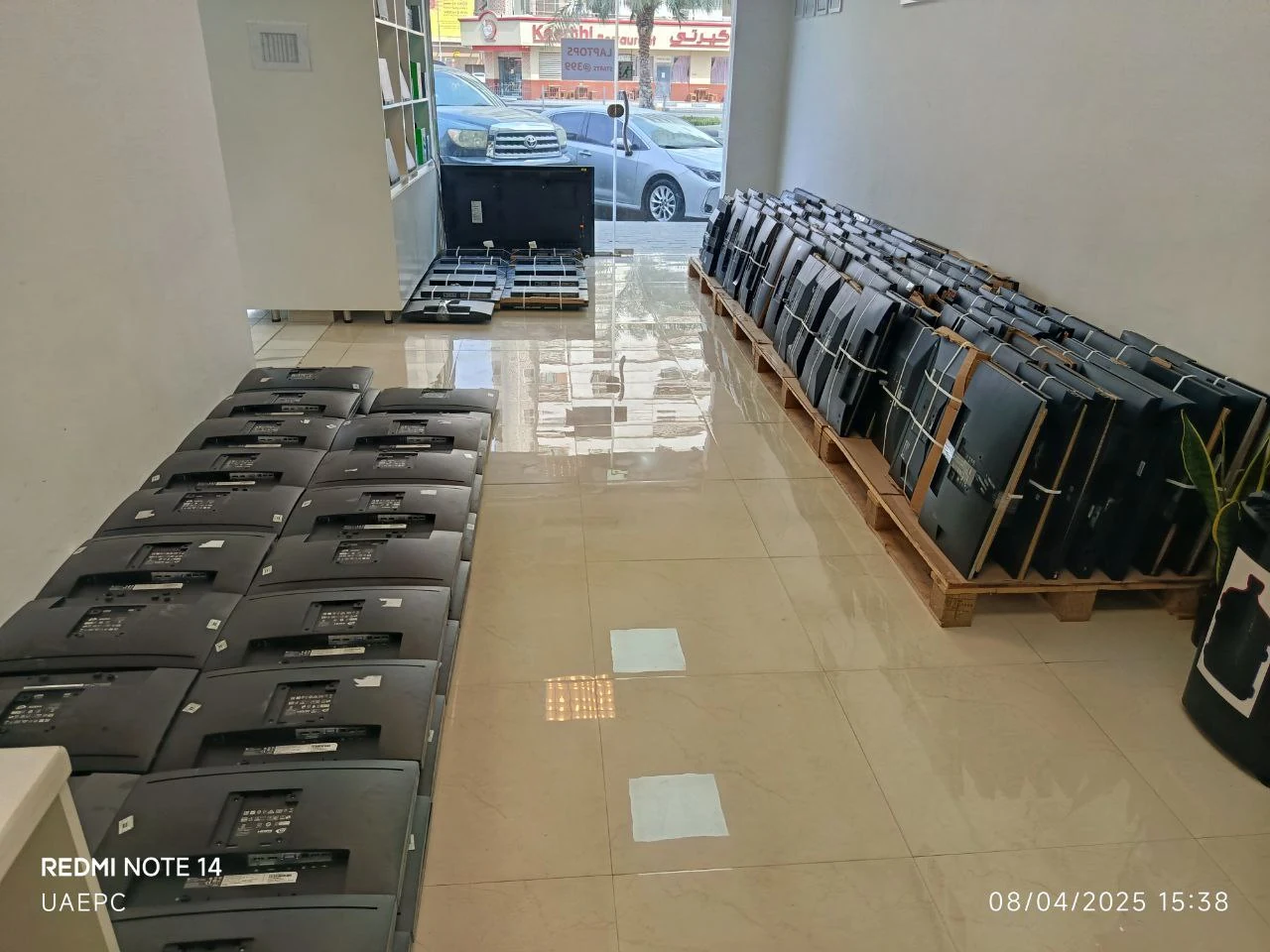
JNP Signal: the JNP Roundabout used-computer market (Industrial Area 2)
If there is one single point on the Sharjah map you have to know, it's the JNP Roundabout — known locally as "JNP Signal" (and sometimes "GP signal"). It sits in Sharjah Industrial Area 2, and the streets around it host the single largest concentration of used and refurbished computer shops in the whole UAE — somewhere north of 500 stores clustered together. This is the canonical landmark local buyers mean when they say "the Sharjah used-laptop market."
So many buyers arrive looking for this one landmark that we gave it a guide of its own — the exact spot on the map, how to drive in from Dubai, when the shops really open, what each cluster around the roundabout actually stocks, honest 2026 wholesale prices, and how to buy the same stock without flying in: JNP Signal Sharjah: inside the UAE's biggest used computer market.
Where it is and how to get there
- Location: Sharjah Industrial Area 2, around the landmark JNP Roundabout (the "JNP Signal").
- From Dubai: about 20 minutes by car via Sheikh Mohammed Bin Zayed Road (E311). Careem or Uber is the easiest way in.
- Opening hours: roughly 9am to 9pm, Saturday to Thursday; Friday opens later, after prayers.
- What's sold: laptops, mini-cases and desktops, servers, monitors, printers and parts — all used/refurbished stock, and openly wholesale-friendly.
JNP shows up in local references as jnp.ae and jnpsharjah.ae, and in a widely-watched YouTube video titled "Used Laptop Market in Dubai | Cheapest Used Laptop Wholesale Market | Sharjah | JNP Signal." It's the best place in the UAE to discover the market for wholesale used and refurbished laptops — but for a safe deal at the real price with a guaranteed grade, the same logic holds as everywhere in this guide: either inspect each unit yourself, or order directly from a licensed warehouse. Our latest updated prices are on the Updated Pricelist.
What you'll find: brands and product categories
The Sharjah computer market is saturated with every major business, gaming, office and server brand — but availability isn't uniform. After sixteen years of buying inside this trade, here's the realistic breakdown for 2026:
1. Business laptops — the engine of the market
These six lines represent about 70% of total wholesale volume. The reason is structural: European and US corporates rotate their Latitude, EliteBook and ThinkPad fleets on three-year lease cycles, and the returns get aggregated and shipped to Sharjah by container. Business-grade chassis means aluminium build, replaceable keyboards, replaceable batteries, replaceable screens, and a designed-for-eight-year service life — perfect for refurbishment economics. If you're scoping a sharjah bulk laptop programme, this is where you spend 70% of your budget.
2. Consumer and gaming laptops
Smaller volumes, broader variety. Apple MacBooks in A+ grade are always available, but priced at 2-2.5× the equivalent Dell or HP — only worth it if your end market is premium. Surface Pro and Surface Laptop trade well; the keyboards are usually replaced before resale.
3. Desktop towers and SFFs
Often overlooked but a significant slice of the trade. Sharjah supplies four desktop form factors:
- Tower workstations (HP Z, Dell Precision Tower): for CAD, render farms, engineering. AED 800-2,500.
- Mid-size desktops (HP ProDesk, Dell OptiPlex 7000): standard office, best price/performance ratio. See our computer desktops in stock.
- Compact SFFs (Dell OptiPlex SFF): small footprint, training labs, schools. AED 350-800.
- Ultra-compact mini PCs (Lenovo ThinkCentre Tiny, HP EliteDesk Mini, Dell OptiPlex Micro): the bestseller category of 2026. Replacing thin clients and entry desktops industry-wide.
4. Monitors
A wide selection of refurbished business monitors from Dell UltraSharp, HP EliteDisplay, Lenovo ThinkVision, LG and Samsung. Sizes 19" to 32". AED 150-1,200 depending on size and resolution. USB-C docks are a fast-growing category.
5. All-in-One PCs
AIO units from HP EliteOne, Dell OptiPlex AIO and Lenovo ThinkCentre AIO. Sizes 22" to 27". Strong demand from schools, clinics, hospitality. AED 950-2,200.
6. Parts and accessories
Sharjah is not only finished machines. Substantial volume of laptop parts (batteries, keyboards, LCDs, adapters) and computer parts (SSDs, DDR3/4 RAM, GPUs, PSUs) move through the same warehouses — both new pulls and used.
Real 2026 price ranges: 10 model benchmarks
Read this section with care: prices in Sharjah fluctuate daily based on USD strength, container arrivals, and inter-supplier competition. The table below shows the realistic 2026 average market range for some of the volume models. These are 10-unit wholesale prices. A 50-100 unit order typically drops another 10-15%.
| Category | Sample Model | Spec | Grade | Price (AED) |
|---|---|---|---|---|
| Office laptop | Dell Latitude 5410 | i5-10th, 8GB, 256GB SSD | A | 1,050 — 1,250 |
| Office laptop | HP EliteBook 840 G7 | i5-10th, 16GB, 512GB SSD | A+ | 1,400 — 1,750 |
| Business laptop | Lenovo ThinkPad T14 | i7-11th, 16GB, 512GB SSD | A+ | 2,000 — 2,400 |
| Premium laptop | Dell XPS 13 (9310) | i7-11th, 16GB, 512GB SSD | A+ | 2,800 — 3,400 |
| MacBook | MacBook Pro 13" M1 | 8GB, 256GB | A+ | 2,900 — 3,500 |
| Mid desktop | Dell OptiPlex 7060 SFF | i5-8th, 8GB, 256GB SSD | A | 650 — 850 |
| Ultra-compact | Lenovo ThinkCentre M720q | i5-8th, 8GB, 256GB | A+ | 800 — 1,050 |
| Monitor 24" | Dell P2419H | FHD, IPS | A | 380 — 480 |
| Monitor 27" | HP EliteDisplay E273 | FHD, IPS, USB-C | A+ | 560 — 720 |
| AIO 23.8" | HP EliteOne 800 G5 | i5-9th, 16GB, 512GB | A | 1,650 — 2,000 |
The A+ grading system — the market's shared language
Grading is the shared language of the Sharjah wholesale market. Every supplier uses A+, A and B labels — but interpretations drift. The table below is the standard that UAEPC and most reputable global wholesale partners apply:
| Grade | Cosmetic condition | Function | Price delta vs Grade A | Suitable for |
|---|---|---|---|---|
| A+ | Near-new, no visible use marks | 100% functional | +25% to +35% | Executives, premium retail |
| A+ | Microscopic scratches; hard to spot | 100% functional | +10% to +15% | Corporates, training institutes |
| A | Minor visible scratches | 100% functional | baseline price | Standard wholesale |
| B | Visible scratches/dents; keyboard wear possible | 98% functional (battery may be weak) | −15% to −25% | Budget markets, rural training |
Where Sharjah grading gets confused
Weaker suppliers invent grades like A- and BB that have no global standard. These are sales tricks. If you don't understand a grade, ask for photos. Any seller who refuses to send real photos before payment should be skipped — that's a hard rule.
Sharjah computer market vs. Hong Kong, Shenzhen, Istanbul, Riyadh
Sharjah doesn't exist in a vacuum. Sophisticated buyers often compare it against the other big global wholesale hubs. After buying personally from four of these markets across sixteen years, here's the honest matrix:
Sharjah vs. Hong Kong
Hong Kong moved aggressively into Apple, premium gaming and consumer SKUs over the last decade — but for refurbished business laptops at volume, Sharjah wins on price (15-25% cheaper for comparable grades) and on supplier diversity. Hong Kong is better for Apple-heavy programmes and for buyers who need rapid air-freight to East Asia. For African and Middle Eastern destinations, Sharjah is the right answer.
Sharjah vs. Shenzhen
Shenzhen is the cheaper market on paper — but for refurbished business machines, Shenzhen mostly supplies low-tier B and B− stock pulled from Chinese domestic enterprise cycles. The brand-Latitude / EliteBook / ThinkPad lease-return supply is European in origin and lands in Sharjah, not Shenzhen. If you want the cheapest possible cost and don't care about grade, Shenzhen. If you want quality refurbishment, warranties, and a documented chain, Sharjah.
Sharjah vs. Istanbul
Istanbul has grown a respectable refurb cluster, especially for Eastern European stock. But unit pricing runs higher than Sharjah by 8-15%, freight to Africa and the Gulf is more expensive, and supplier vetting is harder for buyers who don't speak Turkish. For Central Asian buyers (Tashkent, Almaty, Bishkek), Istanbul has an air-freight time advantage; for everyone else, Sharjah.
Sharjah vs. Riyadh
Riyadh and Jeddah have a smaller wholesale market focused on the Saudi domestic enterprise channel. Stock is limited, prices are higher, and export documentation isn't optimised for re-export. For buyers within KSA, sometimes worth it; for everyone outside KSA, Sharjah is cheaper to source from and ship out of.
Pre-trip checklist for international B2B buyers
If you have decided to fly in, treat this checklist as non-negotiable. Each item I left out cost me money during my own early years in the market:
- Visa: Apply for a UAE business visa (90-day) if you want to issue commercial invoices in your own name. A standard tourist visa is fine if you're sourcing on behalf of a foreign company and have the company paperwork.
- Passport and copies: Bring two photocopies. Any reputable supplier will need a passport copy for the official invoice.
- Importer card or trade licence: Required to enter Industrial Area or SAIF Zone warehouses. Without it, you're locked out of the bulk supply.
- Payment ready: AED cash for small deposits (under 5,000), SWIFT or USDT for larger amounts. European or US-issued Visa/Mastercard tends to work better in Sharjah than non-Western cards.
- Local SIM: du or Etisalat data + voice for AED 50. WhatsApp coordination with suppliers is essential.
- Detailed shopping list: Model, CPU, RAM, storage, grade, quantity. Walking in empty-handed is a guaranteed price escalation.
- 3-4 appointments pre-booked: WhatsApp suppliers in advance. UAEPC: WhatsApp.
- A trusted local contact: If language is a barrier, take a vetted local agent — but never rely on the agent alone. Verify everything yourself.
- Careem or Uber app: Local rides between Sharjah and Dubai. Yellow taxis also fine.
- Hotel in Sharjah, not Dubai: Al Khan or Al Majaz hotels at AED 200-400 per night, 10 minutes from the market. Staying in Dubai burns 45 minutes per day in commute.
When to buy: seasonality of the Sharjah computer market
Timing matters more than most foreign buyers realise. The Sharjah computer market has a clear rhythm:
- October — March (best window): Cool weather (22-30°C), inventory is fully stocked from European Q4 lease-returns, suppliers are active, prices are reasonable.
- January (peak buy month): European corporate IT runs year-end fleet refresh in November-December. Stock lands in Sharjah in early January. This is when the best A+ inventory hits the market and prices are at their best. Plan major orders for January.
- April — May (acceptable): Temperatures climbing but bearable. Inventory thinning. A good time for second-tier negotiation but choices narrower.
- June — August (avoid): 45°C+ heat, market thins out, suppliers low-energy, selection limited. Ramadan (when it falls in this window) further reduces working hours.
- September (transitional): Beginning to recover. Acceptable for relationship-building visits, not for major buys.
7 mistakes that cost new buyers thousands
Every year, hundreds of buyers from Nigeria, Kenya, Pakistan, Tanzania, India, Iraq and Egypt arrive in Sharjah for the first time — and many leave with an expensive lesson. These seven mistakes are the most common:
Trusting the first quote
If you negotiated with only one supplier, you almost certainly overpaid by 15-25%. Always quote with at least three suppliers before committing.
Paying a deposit without a TRN invoice
Never wire or hand over cash until you hold an invoice with a 15-digit TRN, company stamp, and per-unit detail. No TRN = no real company = no recourse.
Ignoring battery health
Grade A+ refers to the chassis. The battery is a separate part. Always demand Battery Health > 80% certified, or replace before resale. At UAEPC the floor is 70% on the original battery, and anything under it is replaced with a new one before the unit ships — our published grading standard sets out how that is measured.
Skipping on-site testing
Before final payment, test 10% of the order in person: boot, screen, hinges, all ports, keyboard backlight, fingerprint reader. Five minutes per unit saves a thousand dollars in disputes.
Travelling in summer
June-August: 45°C+ heat, half the market closed, suppliers reluctant, choices narrow. Plan for October-March.
Shipping without insurance
Cargo insurance is 0.5-1% of the cargo value. Skipping it on a 200-unit container exposes you to USD 200K+ of risk for a USD 1,500 saving. Never skip it.
Rushing the payment under pressure
"Pay now, price goes up tomorrow" is the oldest pressure tactic. The Sharjah market is huge — nothing is ever that urgent. If you feel rushed, walk out.
The UAE negotiation playbook
Negotiation in Sharjah is a cultural art, not a sign of weakness. Accepting the first price flags you as an amateur — and on the next visit you'll be quoted higher than the locals. A few rules that consistently work:
- The 15-20% rule: The opening quote is almost always 15-20% above the true floor price. Your first counter should be 15% below the quote.
- Negotiate on quantity, not unit price: Instead of "lower the price," ask "what if I take 50?" — this is the professional move and gives the seller permission to drop.
- Announce cash payment: Full cash or fast SWIFT typically unlocks an extra 2-5% discount. Mention it early.
- Bundle SKUs: If you need laptops + monitors + adapters, negotiate the basket total, not each line. Suppliers will absorb more in a basket.
- The long silence: After the seller's number, stay silent and maintain eye contact for 10-15 seconds. The seller often improves the number on their own.
- The walk-out: If the price genuinely doesn't work, stand up and walk towards the door. Eight out of ten times you'll be called back. If you're not, the price really wasn't movable — and you saved yourself a bad deal.
- Don't buy at the first shop: Even if you got a great quote on shop #1, visit shop #2 before committing. The comparison gives you confidence.
5 risks in the Sharjah computer market — and how to neutralise them
Now to the uncomfortable part. These five risks are the realistic threats for new foreign buyers in the Sharjah computer market:
1. The broker without a warehouse
Many "sellers" in Rolla and Al Ras have no warehouse. They take your deposit, walk over to a real wholesaler, mark it up, and ship to you. The consequences:
- Higher than market price
- Weaker quality control
- Slow, unclear recourse on defects
- Delivery delays
Fix: Always ask "where is your warehouse? Can I visit?" Anyone who can't or won't show you their warehouse is a broker. Skip.
2. Graded-down stock
The most common scam. You order A+, you receive A or B. Photo evidence is hard from a distance.
Fix: Insert a clause into the invoice: "Grade lower than invoiced = X% discount or full return". Reputable companies accept this clause.
3. Stock battery sold as refurbished
Refurbished laptops are supposed to ship with a replaced battery. Many suppliers cheat and ship the original (sometimes 4-year-old) battery and call it refurbished.
Fix: Run powercfg /batteryreport on Windows or check System Information > Power on macOS. Demand > 80% battery health, certified in the invoice.
4. Aftermarket screen swap
Original Dell/HP LCDs are sometimes replaced with cheaper Chinese panels — colour, viewing angle and lifespan are inferior.
Fix: Cross-check the LCD serial against the chassis serial. They should match the OEM family. Tools like AIDA64 or HWiNFO reveal panel manufacturer.
5. Uninsured freight loss
A 200-unit container from Sharjah to Lagos, lost without insurance, can wipe out a year of margins.
Fix: Take cargo insurance from a major UAE insurer (Oman Insurance, AXA Gulf, Orient) at 0.5-1% of cargo value. It's the cheapest peace of mind in this business.
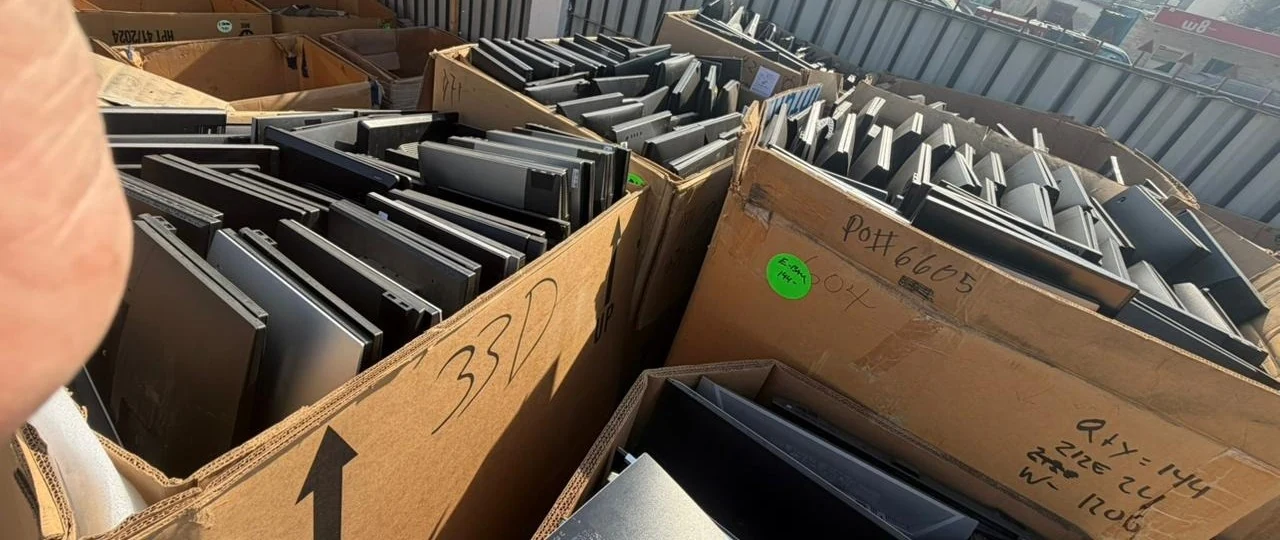
Freight, customs and clearance to 13 countries
You bought well. Now you need to get the cargo home — and this is where 30-45% of the order's true cost lives. Three primary routes:
Route 1: Air freight
- Transit time: 2-7 days
- Cost: expensive — roughly USD 4-8 per kg to Africa, USD 3-5 to the Gulf
- Best for: urgent orders, low-volume (under 50 units)
- Constraint: lithium battery rules limit single-shipment quantities; handling fees add up
Route 2: Sea freight
- Transit time: 10-25 days depending on destination
- Cost: 60-70% cheaper than air, per unit
- Best for: full or partial containers, 200+ unit orders
- Origin ports: Khalid Port (Sharjah), Jebel Ali (Dubai), Hamriyah
Route 3: Road / truck
- Transit time: 5-10 days
- Cost: between air and sea
- Best for: Saudi Arabia, Oman, Jordan, Iraq
- Constraint: complex re-routing for some destinations because of transit-state customs
| Destination | Recommended route | Transit time | Relative cost (100kg) |
|---|---|---|---|
| 🇳🇬 Nigeria (Lagos) | Sea + clearing | 18-25 days | $320-$480 |
| 🇰🇪 Kenya (Nairobi) | Sea to Mombasa + road | 14-20 days | $280-$420 |
| 🇿🇦 South Africa (Johannesburg) | Sea to Durban + road | 18-25 days | $320-$470 |
| 🇪🇬 Egypt (Cairo) | Sea to Alexandria | 10-14 days | $280-$380 |
| 🇸🇦 Saudi Arabia (Riyadh) | Direct road | 4-6 days | $180-$260 |
| 🇮🇶 Iraq (Baghdad) | Road via Oman | 8-12 days | $220-$320 |
| 🇵🇰 Pakistan (Karachi) | Air / Sea | 3-12 days | $320-$520 |
| 🇮🇳 India (Mumbai) | Sea | 10-14 days | $280-$400 |
| 🇹🇷 Turkey (Istanbul) | Air | 2-4 days | $450-$650 |
| 🇰🇿 Kazakhstan (Almaty) | Air | 3-5 days | $520-$720 |
UAE VAT, TRN invoices and landed cost
Since 2018 the UAE has charged 5% VAT on domestic transactions. Foreign B2B buyers need to know four things:
- TRN: Every legitimate UAE company has a 15-digit Tax Registration Number, printed on the invoice. No TRN = no real company. Walk away.
- Zero-rated export: When cargo is being re-exported out of the UAE, VAT is zero-rated. Reputable suppliers mark this on the invoice — this is a real 5% saving for foreign buyers.
- Destination customs: Nigeria 10-20%, Kenya 16% VAT + 25% duty on some HS codes, South Africa 15% VAT + 0-20% duty, Egypt 14% VAT + 5-20% duty, Saudi Arabia 5% + 5-15% duty, Turkey 18%+. Run these numbers before you commit.
- HS code: Laptops typically fall under HS code 8471.30 (portable digital ADP). Some countries apply a different tariff for refurbished. Check with your customs broker before the container leaves.
The smart alternative: buy without flying
After reading everything above, you may have concluded: "this is a lot of work." You're right. A one-week sourcing trip to the Sharjah computer market for a 20-50 unit order genuinely does not pencil out. Flights, hotels, taxis, meals, time off your home business, jet lag, and execution risk add up to USD 1,500-2,500 before you've bought anything.
Established companies like UAEPC.COM Computers run the entire process remotely for international buyers:
- Real photos and video of every unit before payment
- 25-point inspection per unit (CPU, RAM, storage, battery, screen, ports, keyboard, fingerprint, webcam, audio, hinges, chassis)
- Battery Health and serial numbers reported before order confirmation
- 60-day warranty with replacement
- Insured freight to 13 countries
- MOQ from 10 units — accessible for small B2B buyers
- TRN-numbered, zero-rated export invoice
- Payment by SWIFT or USDT for qualifying orders
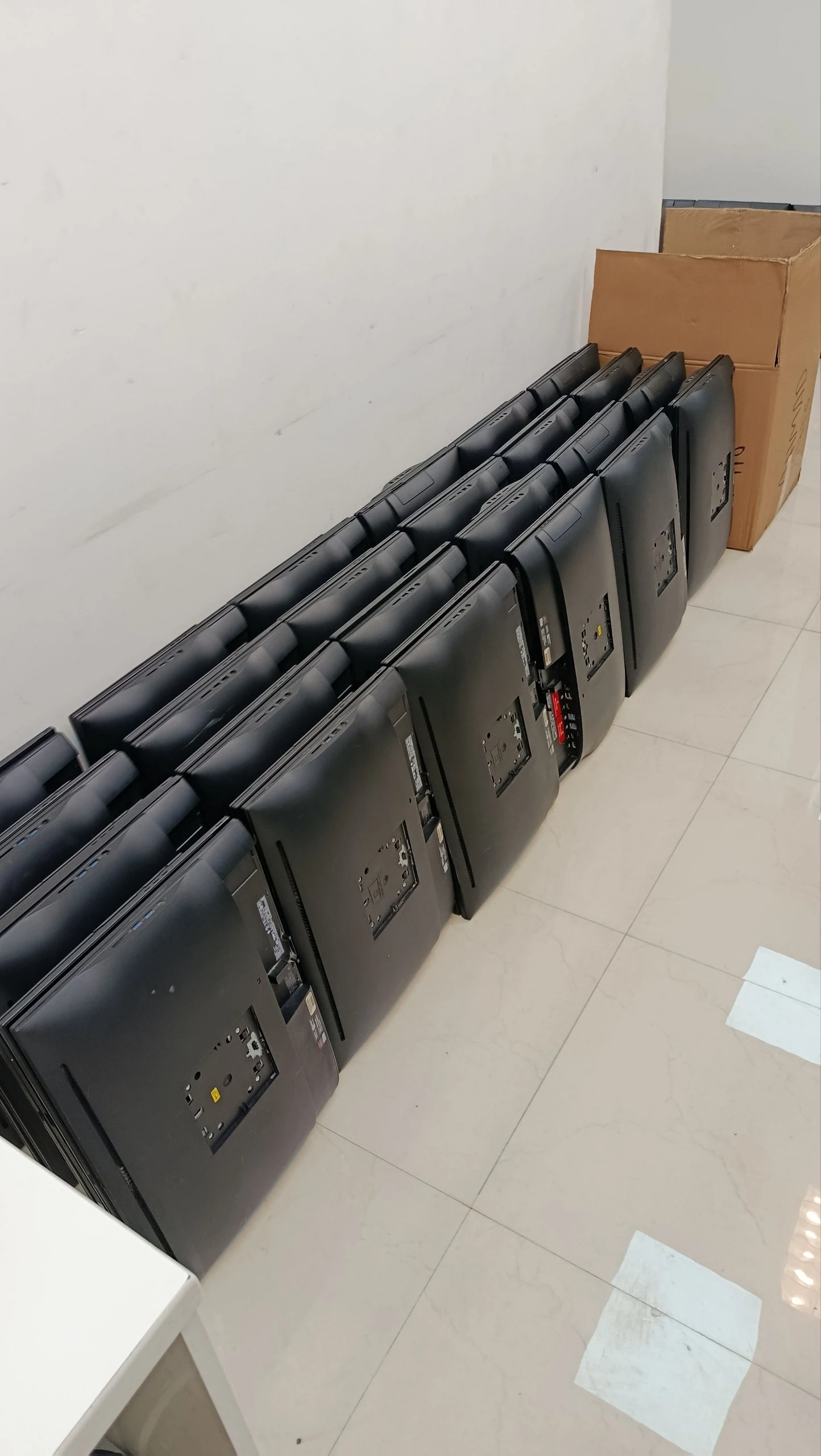
Ready to source without flying?
Mohammad Dolatyari personally reviews every new buyer enquiry. 24-hour response guaranteed.
Frequently asked questions
Where is the Sharjah computer market?
The Sharjah computer market is spread across four main districts: Al Ras and Rolla Square (the retail heart), Al Mahatta Street (the older Iranian/Afghan-led wholesale block), Al Khan / Al Majaz (the higher-end B2B showroom area), and Sharjah Industrial Area 3 to 7 (the bulk warehousing zone). Free-zone export operations sit inside SAIF Zone next to Sharjah International Airport.
What is JNP Signal / the JNP Roundabout in Sharjah?
JNP Signal — also called the JNP Roundabout or "GP signal" — is in Sharjah Industrial Area 2, and the streets around it form the single largest used-computer wholesale market in the UAE, with 500+ shops selling used and refurbished laptops, desktops, servers and printers. It is about 20 minutes from Dubai via Sheikh Mohammed Bin Zayed Road (E311) and opens roughly 9am to 9pm. It is openly wholesale-friendly, but many of the "sellers" around the roundabout are middlemen with no stock of their own — so ask to see the actual warehouse and demand an official invoice before paying. Local references: jnp.ae and jnpsharjah.ae.
How is the Sharjah computer market different from Dubai for B2B wholesale?
Sharjah is the wholesale heart of UAE computer trade; Dubai is the retail and premium-brand front. Warehouse rent in Sharjah is roughly 50-60% cheaper, business licenses through Sharjah Economic Development cost less, and the same Dell, HP and Lenovo refurbished stock trades at 15-30% lower prices than the Dubai equivalents at Naif or Al Fahidi. For any UAE computer bulk order above 20 units, Sharjah is the rational choice.
What is the price range of a Dell Latitude Grade A laptop in the Sharjah computer market?
A Grade A Dell Latitude in 2026 trades between AED 850 and AED 1,800 (roughly USD 230-490) depending on the generation and spec. The volume models — Latitude 5400/5410 with an 8th-gen i5, 8GB RAM and 256GB SSD — sit at AED 1,050-1,300. On a 20-unit bulk order, expect an additional 10-15% wholesale discount; 100+ units unlocks another 5-8%.
Can I buy from the Sharjah computer market without travelling to the UAE?
Yes. Legitimate UAE computer wholesalers like UAEPC.COM Computers (Mohammad Dolatyari Electronics Trading LLC) ship to 13 countries, send real photos and video of every unit before payment, provide a 60-day warranty, and accept bank transfer or USDT for qualified orders. Travelling only makes sense when you specifically need to inspect a sample container in person.
What does the A+ / A / B grading system mean in the Sharjah computer market?
A+ means near-new condition with no visible use marks and 100% functional. A+ has microscopic scratches you have to hunt for; 100% functional. A has visible but minor scratches and is 100% functional — this is the standard wholesale grade. B has noticeable scratches or small dents and is 98% functional (battery may be weaker). The price spread between A+ and B can be 25-40%.
When is the best time of year to buy from the Sharjah computer market?
October through March: cool weather, full inventory, active suppliers. Avoid June-August — temperatures hit 45°C+, the market thins out, and you waste days walking through closed showrooms. January carries the best prices because European corporate IT inventories flush out at year-end and arrive in Sharjah warehouses in early January.
What are the risks when buying from the Sharjah computer market?
The five real risks: broker sellers with no warehouse, graded-down stock, stock batteries sold as refurbished, replaced Chinese LCDs, and shipping without insurance. The fix: only work with companies holding a Sharjah Economic Department licence and a TRN, demand official invoices, and inspect 10% of any order before paying.
What is the minimum order quantity for a Sharjah bulk laptop deal?
Most large Sharjah wholesalers want 50-100 units minimum. UAEPC opens a wholesale account from just 10 units, which is the lowest practical MOQ for international B2B buyers — ideal for testing the market or scaling slowly into 100-500 unit container orders.
How do I calculate the landed cost of a UAE computer bulk order?
Landed cost = unit price × quantity + freight (air or sea) + bank/FX cost (1-3%) + cargo insurance (0.5-1% of cargo value) + destination customs (5-18% depending on country) + clearance fees. For most African and Central Asian destinations, expect 30-45% on top of the FOB Sharjah price. UAEPC's quote includes a transparent breakdown when you submit an enquiry at /en/inquiry.
What payment methods does the Sharjah computer market accept?
AED cash and USD cash are universal. SWIFT bank transfer is standard for invoiced orders. USDT (Tether) is accepted by several Iranian-Emirati and Afghan-Emirati wholesalers for larger orders. Credit card is rarely used in wholesale because of the 2.5-3.5% processor fee. UAEPC's payment options include all of the above.
Conclusion: the decision is yours
The Sharjah computer market is real, valuable, and has been the supply backbone of hundreds of African, Asian, Middle Eastern and Central Asian computer businesses for the better part of two decades. But it is not a market to walk into blind. If you fly in, use the checklist above. If you don't fly in, work with a uae computers supplier that has done the field work for you and has the licence, warehouse, photos, warranty and freight contracts to prove it.
I'm Mohammad Dolatyari, and through UAEPC.COM Computers (Mohammad Dolatyari Electronics Trading LLC) I take the complexity off your desk. We are the same Sharjah warehouse the brokers buy from — except you deal with us directly, at the wholesale floor price, with the real grade, with the real warranty, and with documented freight.
🏢 Our own warehouse in Sharjah — no brokers in the middle
📜 Licensed by Sharjah Economic Department + TRN-registered
📦 MOQ from 10 units — accessible for small B2B accounts
🛡️ 60-day warranty with replacement guarantee
🌍 Shipping to 13 countries under Oman Insurance cover
🗣️ Support in English, Arabic, Persian
💰 Payment by SWIFT, USDT (qualifying orders), and credit lines for repeat customers
Ready to start? Either fill in the online enquiry form or message me directly on WhatsApp. Replies within 24 hours, every business day.
Related articles
Related Articles
Wholesale Used Laptops in Dubai
Real AED price ranges by grade, MOQ 10, carton ordering and export to 13 countries.
Refurbished Laptops in Sharjah
2026 wholesale prices, MOQ and how to buy from the Sharjah market.
Wholesale Refurbished Laptops Guide
Grading, MOQ, brands, pricing and shipping — the full bulk-import playbook.
Before you pay any UAE supplier — ours included — run the four public licence checks. Our numbers are published for exactly that: verify UAEPC (licences & TRN).